
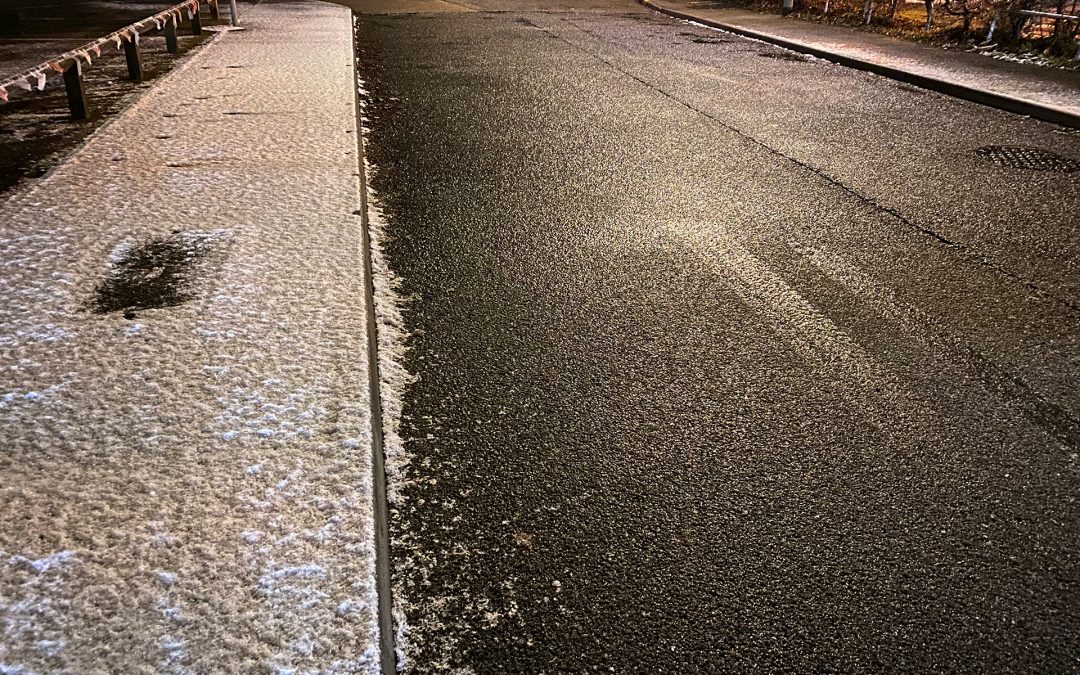
Ice can be a huge risk to people during the winter seasons. It is formed at temperatures below 0°c, where liquid water freezes and turns into a solid. To stop ice forming on outdoor surfaces we use grit!
The grit salt lowers the freezing point of the water, making existing ice melt and prevents more from forming. We aim to spread the salt before roads become icy (this is known as precautionary salting) as this is much better than treating already formed ice.
What Are The Biggest Ice Risks?
There are many risks of ice in outdoor areas, and you should be aware of them.
Here are a few of the most common risks:
Increase in Injuries
Walkways, car parks and commercial areas which are not gritted can easily cause people to slip when walking and may also cause drivers to skid on the icy surfaces. These people may be customers walking into shops, staff entering shared office buildings or external clients visiting your business. Safety is highly important and something must be done to meet health and safety regulations.
Common injuries are fractures, sprains and head injuries which can vary from minor bumps to severe concussions so it is vital to reduce the risks of ice.
Danger for Drivers
Vehicle collisions are likely to happen without grit and can occur on roads to commercial parking areas.
Ice is a big risk for those driving due to:
- Lack of traction: Tyres struggle to grip on slippery outdoor surfaces, so when there is ice it can cause the vehicle to slide across roads and car parks. Because of the reduced grip that tyres have on ice in comparison to dry land, braking distances are also much longer so it takes a longer amount of time for the vehicle to stop. This causes an increased risk of a crash.
- Unexpected patches of ice: People may be driving as carefully as possible when they notice the ground is more icy than usual, however unexpected patches of ice may catch drivers off guard which can put other drivers at risk. There is a lack of awareness of black ice as it blends in with the surfaces. This is because the ice is formed without bubbles being created, making it invisible.
- Traffic congestion: During the colder months, people are less likely to use other methods of transport such as walking or cycling to their destinations. This increases the amount of congestion so it may be busier on the roads leading to an increased chance of car accidents occurring.
Frozen Businesses
Icy entrances, walkways and car parks can create significant dangers, often reducing customer visits. Because of this, some businesses suffer from financial loss and begin to struggle.
It is highly important to stay compliant with health and safety regulations as ice can be a huge problem for customers, employees and society. People may also make legal claims against you and your business if ice related accidents occur, so ensure that your business premises are gritted for the winter months!
Reducing These Risks With Grit!
What do Lincolnshire Gritters use to reduce the risks mentioned above? Grit! Grit is a simple way to make existing ice melt and also stops more ice from forming.
Ways grit reduces the risks:
Prevents Slips and Falls
Ideally, salt should be spread on outdoor surfaces before they become icy or snow starts to fall (precautionary salting). We spread the salt in advance to prevent ice forming, preparing us for when the temperatures fall. This is more effective than treating already formed ice as it reduces the risks of anyone slipping and falling on the surfaces because the grit has already been spread before surfaces become icy. Injuries are then prevented and the public is kept safe.
Keeping Roads Safe
Spreading grit in areas such as car parks and business premises melts the ice and stops it from forming. This means that vehicles can safely drive as surfaces are no longer slippery! Due to this, drivers can make it to their destinations without the worry that they may face unexpected patches of ice which can cause them to slip and slide.
Frost-Free Businesses
Hiring a professional gritting contractor ensures that your business remains compliant with health and safety regulations, creating a safer environment for both employees and customers.
These experts bring the training, experience, and equipment to handle all your winter maintenance needs. They know precisely how much grit to use, where to apply it, and when to apply it. A reliable contractor will have all the latest equipment, which means you don’t have to worry about maintenance costs, storage or upgrade expenses. This frees up your time and resources so you can focus on your business.
Gritting contractors also keep detailed records, providing you with documented proof that you have taken the correct procedures to protect your employees and customers during the winter seasons. Here at Lincolnshire Gritters, we send reports to our clients whenever we have done a job for them. This usually includes a tracking map and what we have done.
Want to find out more information about how gritting reduces various risks? Have a chat and contact us today.